Authors: Linton F. Munyai a, Tatenda Dalu b
a Aquatic Systems Research Group, University of Limpopo, Polokwane, South Africa
b Centre for Invasion Biology, School for Climate Studies, Stellenbosch University, Stellenbosch, South Africa
In the far north of South Africa, where the waters of the Limpopo and Luvuvhu rivers meet in sweeping floodplains beneath ancient baobabs and fever trees, lies one of the country’s most extraordinary yet least understood landscapes. Here, in the northern reaches of Kruger National Park, water does not simply flow through the land. It shapes it, renews it, and remembers it.
For much of the year, the Makuleke Wetlands appear quiet. Seasonal pans shimmer beneath the heat, some fringed by reeds and floodplain grasses. Tracks of elephants, buffalo and antelope crisscross the mud. Waterbirds descend in bursts of colour and sound after the rains, while beneath the surface countless aquatic organisms emerge with astonishing speed as floodwaters replenish long-dry depressions. Then, as the dry season returns, the landscape contracts again, storing life in hidden refuges until the next flood pulse arrives.
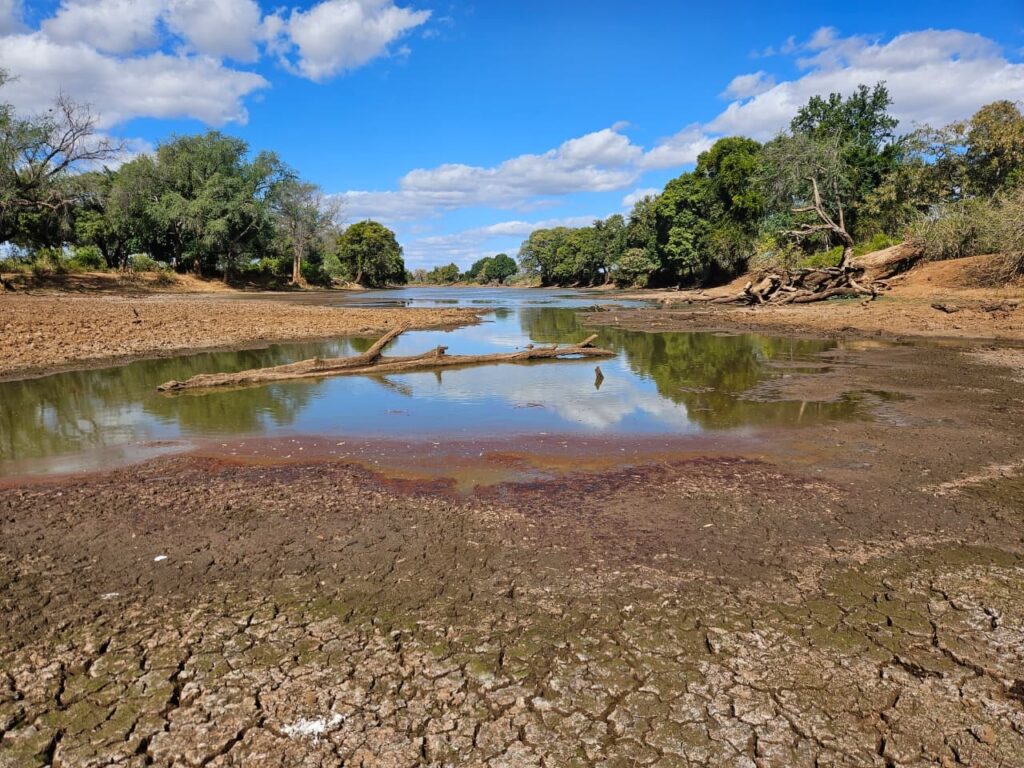
A slowing drying Nwambi pan
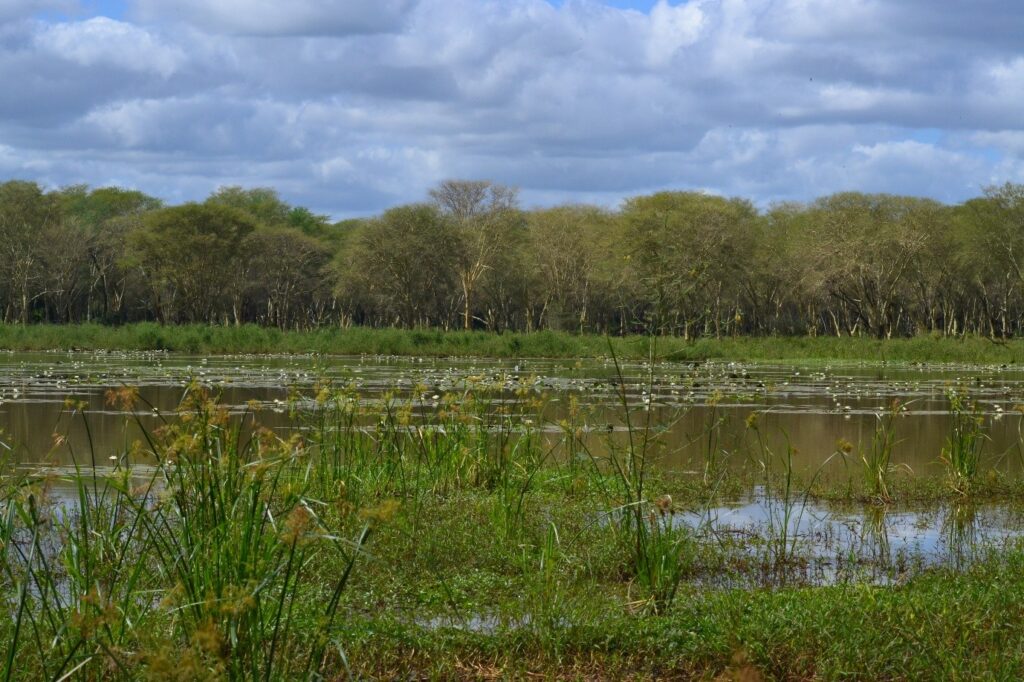
Mambvumbvanyi pan during high water period
To the untrained eye, these wetlands may seem temporary or fragile. They are among the most ecologically important systems in South Africa. Part of a wetland landscape recognised under the Ramsar Convention on Wetlands as internationally important, the Makuleke Wetlands function as critical ecological infrastructure, as they filter water, regulate sediments and nutrients, recharge soils, store carbon, buffer against drought, and sustain biodiversity across one of Africa’s most climatically variable regions. In an era of intensifying climate uncertainty, such ecosystems are becoming increasingly valuable not only for conservation, but for human survival itself.
Yet the story of the Makuleke Wetlands is not only about ecology. It is also a story of memory, displacement, resilience and return. For the Makuleke community, this landscape is ancestral land. Decades ago, families were forcibly removed from the region under colonial policies that excluded local communities, making way for conservation areas. The land became incorporated into the protected area now forming the northern section of Kruger National Park. But in one of South Africa’s landmark restitution cases following the dawn of democracy in 1994, the Makuleke people successfully reclaimed ownership of their land through a negotiated settlement. Rather than pursuing intensive development, the community chose a different path: conservation through co-management.
Today, the Makuleke concession stands as one of the most powerful examples of community-led conservation in Africa. Through a co-management agreement with South African National Parks, the Makuleke community retains ownership of the land while participating directly in its stewardship and sustainable use. This is not conservation imposed from outside. It is conservation rooted in belonging.
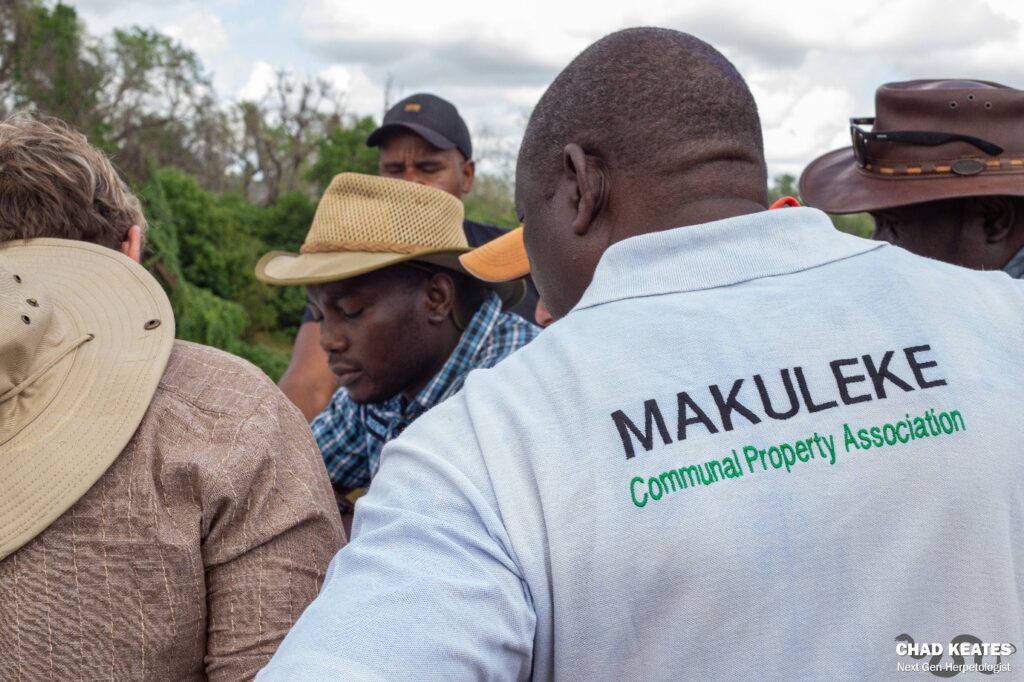
Prof Tatenda Dalu (Director: Centre for Invasion Biology) explain key concepts on the Makuleke Wetlands to Makuleke community leaders, SANParks and Department of Forestry, Fisheries and the Environment personnel.
“People often think conservation means separating communities from nature,” explains Prof Tatenda Dalu, Director of the Centre for Biological Invasions at Stellenbosch University. “But the Makuleke demonstrates something very different, here, the people are not on the margins of conservation, but they are at its centre.”
Since 2020, researchers led by Dr Linton Munyai from the University of Limpopo, together with Prof Dalu, Dr Farai Dondofema (University of Venda), Dr Chad Keates (University of Florida), Dr Eddie Riddell (formerly SANParks, now with the Limpopo Watercourse Commission, LIMCOM) and collaborators, have worked alongside the Makuleke community to better understand the functioning and resilience of these floodplain wetlands. Their research spans water quality, biodiversity dynamics, hydroperiod variability, ecological indicators and climate vulnerability across the seasonal wetland systems that define the landscape.
What makes the wetlands scientifically remarkable is precisely their dynamism. Unlike permanent lakes/reservoirs or rivers, many of the Makuleke Wetlands are ephemeral or seasonal systems, shaped by cycles of flooding and drying. During the rainy season, overflow from the Limpopo and Luvuvhu rivers spills across floodplains, filling shallow pans that become temporary hotspots of biological productivity. These flood pulses trigger explosive ecological responses, where dormant eggs hatch, amphibians breed, aquatic insects emerge in vast numbers, migratory birds arrive to feed and nest, and fish disperse through newly connected channels. For a brief but critical window, the wetlands become engines of life.
“These systems operate on rhythms,” says Dr Munyai. “The timing, duration and extent of flooding determine which species survive, reproduce and move across the landscape. Even small changes in hydrology can reshape entire ecological communities.”
Scientific surveys conducted in the region have revealed diverse assemblages of aquatic macroinvertebrates, amphibians, fish, reptiles and wetland vegetation uniquely adapted to fluctuating environmental conditions. Many of these organisms play vital ecological roles as nutrient recyclers, predators, prey species and indicators of ecosystem health. Macroinvertebrates though often overlooked because of their size, provide scientists with powerful insights into water quality and ecological condition.
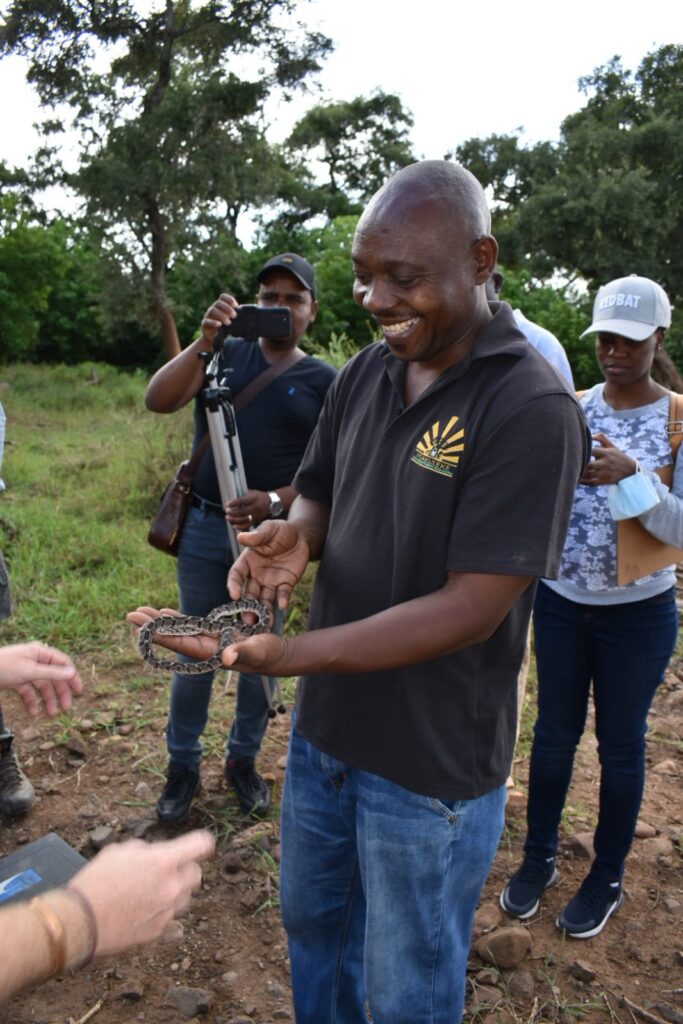
Mr Sydney Shibambu – Member of the Makuleke Communal Property Association holding a unique water snake found within the region
But the wetlands are also increasingly vulnerable. Across southern Africa, climate change is altering rainfall patterns, increasing temperatures and intensifying hydrological unpredictability. Floods are becoming more erratic and intense, and droughts are becoming longer and more severe. Wetlands that depend on delicate flooding cycles may therefore face profound ecological disruption in the coming decades. At the same time, additional pressures threaten freshwater ecosystems across the region, including invasive species, pollution, catchment degradation and unsustainable land-use change. Even protected areas are not immune to external pressures originating upstream, but also provide important regulatory water based ecosystem services downstream
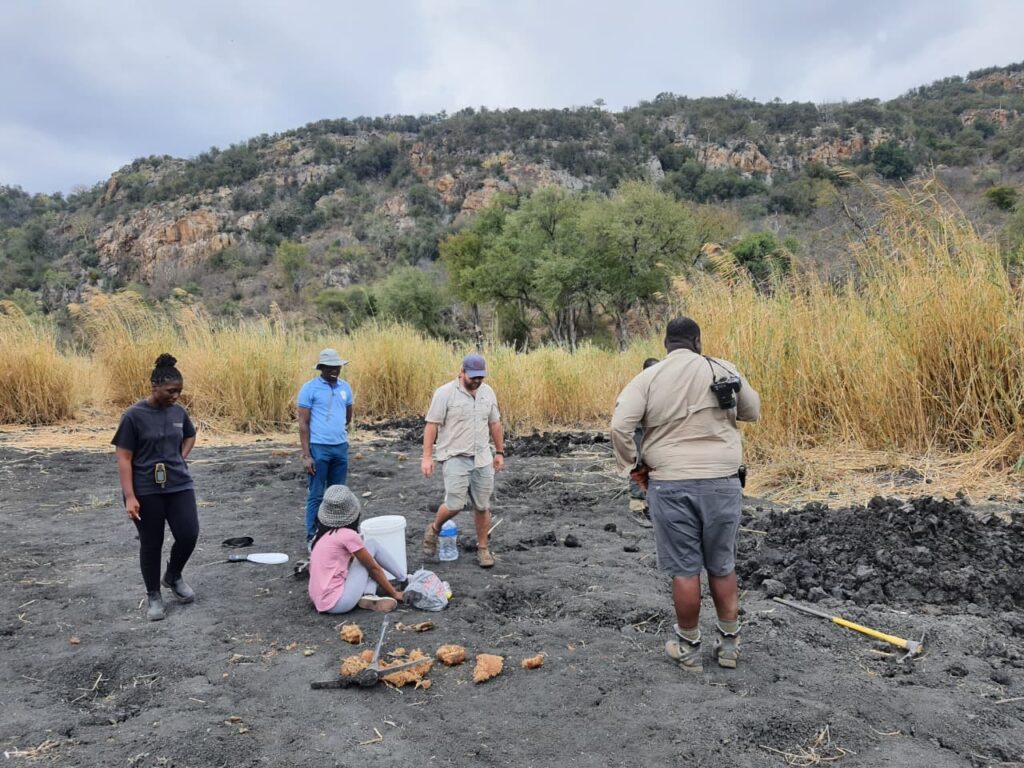
Dr Linton Munyai (blue shirt) with Dr Chantel Chiloane (then a PhD student, black t-shirt), Elsie Leshaba (PhD student, sitting), Dr Chad Keates and Dr Farai Dondofema at a dry Banyini pan
This is where the Makuleke partnership becomes especially important. Rather than treating conservation as a purely scientific exercise, the research integrates local ecological knowledge, community stewardship and participatory monitoring. Community members have joined researchers during field expeditions, assisted with biodiversity surveys and participated in environmental education initiatives designed to strengthen local conservation capacity. In practice, this means local rangers and youth learning how to assess water quality, identify indicator species and monitor wetland condition alongside scientists. But the exchange moves in both directions. Researchers also learn from community knowledge accumulated across generations of living within this landscape.
“The knowledge exchange has been mutual,” explains one field ranger Herman Honest Ntimane involved in the project. “Scientists bring methods and equipment, but the community understands the rhythms of this landscape in ways that cannot always be measured.”
That combination of science and lived knowledge is increasingly recognised globally as essential for long-term environmental stewardship. Across many parts of the world, conservation efforts that excluded Indigenous and local communities often struggled because they overlooked social realities and historical relationships with land. Makuleke Wetlands offers a different model, one where ecological protection, cultural identity and local livelihoods reinforce one another rather than compete.
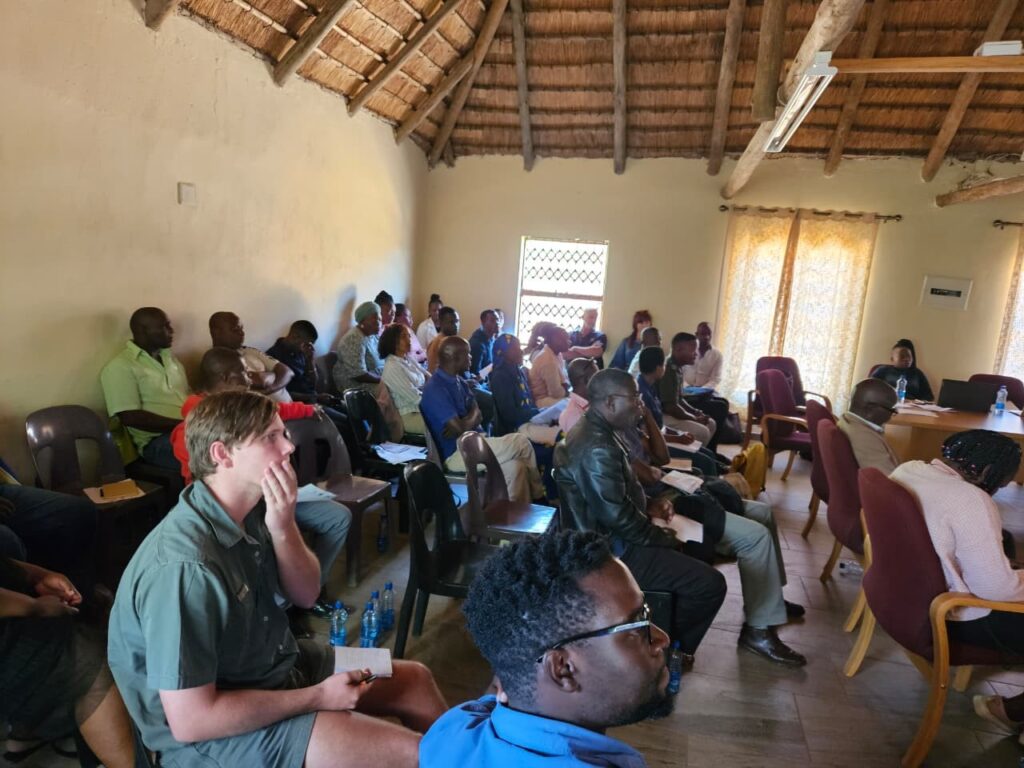
One of the community outreach programmes in Makuleke village
The Makuleke Communal Property Association has also leveraged conservation to support economic development through eco-tourism partnerships, employment opportunities and sustainable land-use initiatives. Tourism lodges within the concession attract visitors seeking a more remote and ecologically rich wilderness experience, generating income while strengthening incentives for long-term ecosystem protection. Importantly, the wetlands themselves remain central to this vision. Their protection is not simply about preserving scenery or wildlife. It is about maintaining the ecological processes that sustain the entire floodplain system.
Wetlands are often called the “kidneys of the landscape” because of their ability to filter and regulate water. But in places such as Makuleke Wetlands, they are far more than that, as they are climate buffers in an increasingly unstable environment, reservoirs of biodiversity in a rapidly changing world and are archives of ecological memory written into flood cycles, soils and seasonal migrations. And they are reminders that conservation succeeds best when communities are recognised not as obstacles to environmental protection, but as its leaders.
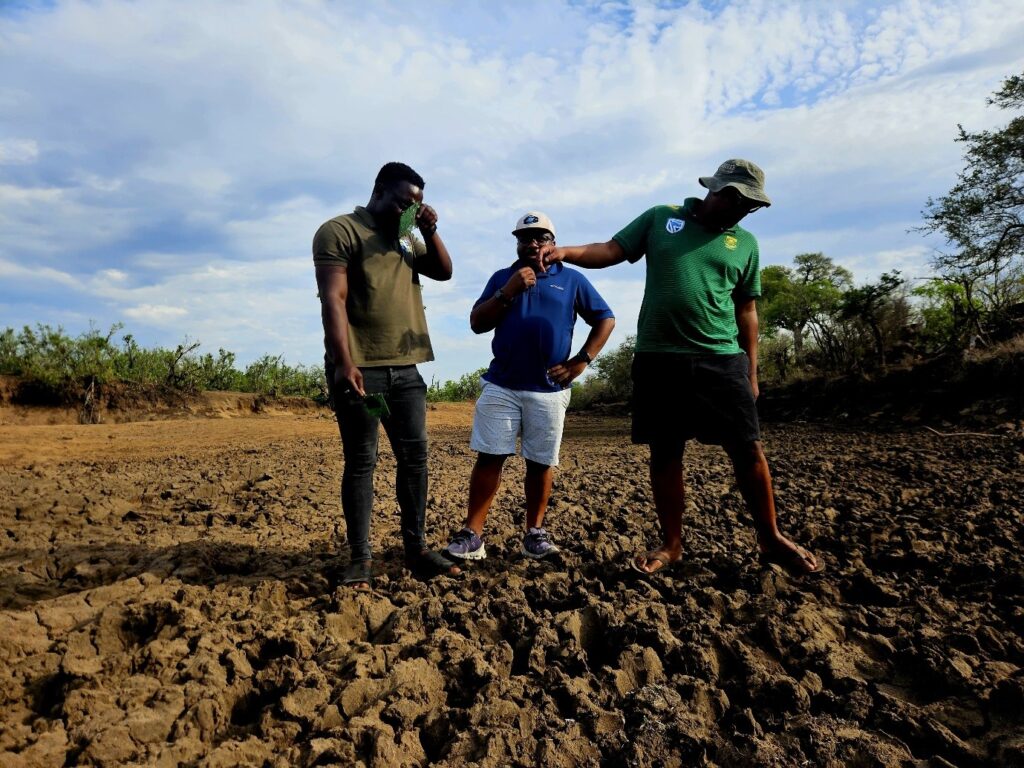
Dr Linton Munyai, Prof Sydney Moyo and Dr Pule Mpopetsi in one of the dry Makuleke pans
As global debates intensify around biodiversity loss, climate resilience and environmental justice, the Makuleke Wetlands offer something increasingly rare, a hopeful conservation story grounded in both science and humanity. Here, restoration did not begin with fences or exclusion. It began with return. The land came home to its people. And through that return, the wetlands gained new custodians.
In the floodplains where the rivers spread and retreat with the seasons, a new model of conservation is quietly taking shape, one built not only on ecological science, but on partnership, dignity and shared responsibility for the future. The Makuleke Wetlands remind us that resilience is not only ecological. It is also cultural, historical and deeply human.
Further reading materials:
- Munyai et al. (2023) — Fish and macroinvertebrate assemblages
- Munyai et al. (2024), Chlorophyll-a and ecosystem functioning
- Keates et al. (2024), Frogs of Makuleke
- Munyai et al. (2023), Sediment metals and ecological infrastructure
- Ngomane et al. (2026), Microplastics and emerging threats
- De Villiers (1999), Land Claims and National Parks