A proposed phased development in Kilifi County could help explore the role of coastal Kenya in the region’s clean-energy transition.
Kenya’s coastal region could play a greater role in Africa’s clean-energy transition as F-Star Renewable Energy advances plans for a proposed large-scale hybrid power project in Magarini, Kilifi County.
As African economies seek reliable, affordable and sustainable electricity to support industrialization, investment and job creation, Kenya’s coastal region presents an opportunity for further renewable-energy development.
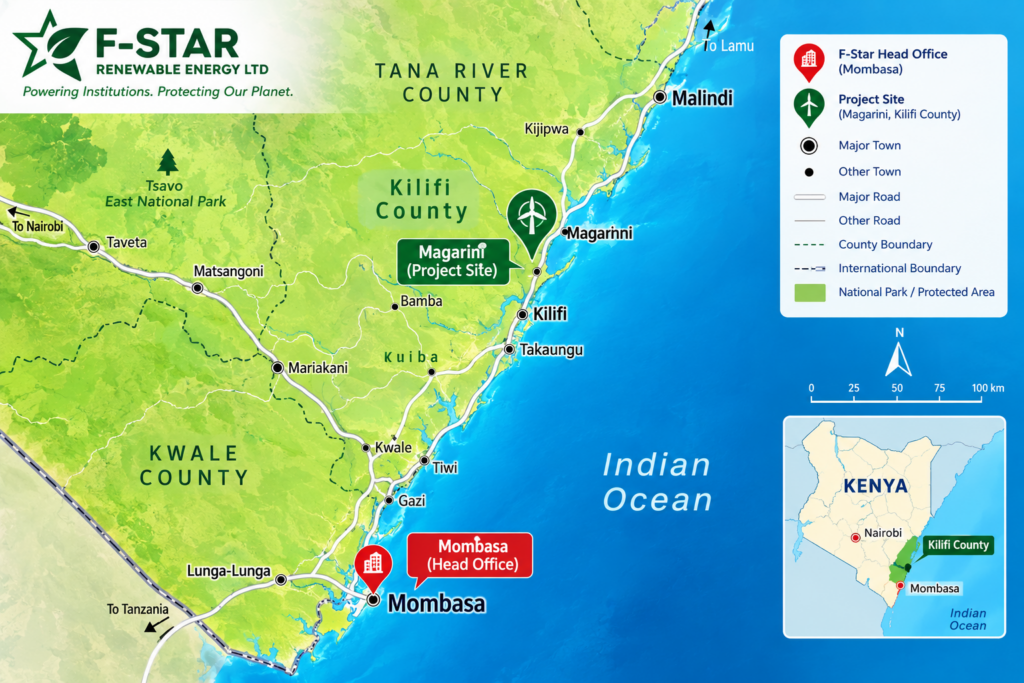
_F-star Renewable Energy Images_
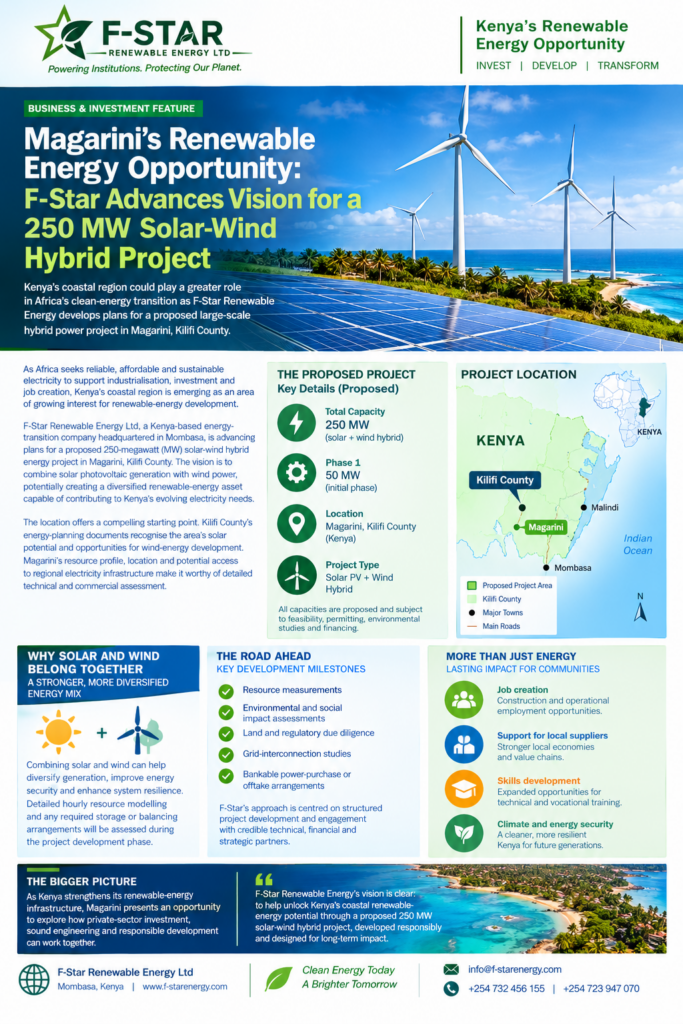
F-Star Renewable Energy Ltd, a Kenya-based energy-transition company headquartered in Mombasa, is developing plans for a proposed 250-megawatt (MW) solar-wind hybrid project in Magarini. The concept would combine solar photovoltaic generation with wind power, potentially diversifying renewable generation and contributing to Kenya’s evolving electricity needs.
Kilifi County’s energy-planning documents identify solar potential and opportunities for wind-energy development in the wider region. Magarini’s resource profile, location and potential access to regional electricity infrastructure make it a candidate for detailed technical and commercial assessment. County-level resource information, however, does not replace site-specific measurements and feasibility studies.
The proposed development is envisaged as a phased project, beginning with a potential 50 MW first phase and expanding towards the 250 MW target if technical feasibility, environmental and social requirements, grid capacity, financing and commercial arrangements are established.
For F-Star, the ambition extends beyond installing renewable-energy equipment. The company’s stated vision is to develop strategic energy infrastructure that could support economic activity, attract long-term investment and contribute to Kenya’s climate and energy-security objectives.
Realizing the project will require rigorous solar and wind resource assessment, environmental and social impact assessment, land and regulatory due diligence, grid-interconnection studies, and bankable power-purchase or other offtake arrangements. These are important development workstreams, and the project’s feasibility and delivery remain subject to their outcomes.
Local economic benefits may also be possible. Depending on project design and implementation, development could create construction and operational employment, support local suppliers and expand opportunities for technical skills development. Employment and investment estimates should be published only when supported by a defined project plan.
As Kenya continues to develop its renewable-energy infrastructure, Magarini offers an opportunity to explore how private-sector investment, sound engineering and responsible development can work together. F-Star’s vision is to help unlock Kenya’s coastal renewable-energy potential through a proposed 250 MW solar-wind hybrid project designed for responsible development and long-term impact.
Invitation to strategic and technical partners
F-Star Renewable Energy welcomes engagement from credible infrastructure investors, renewable-energy developers, engineering, procurement and construction (EPC) contractors, technical advisers and potential energy offtakers interested in assessing the project’s feasibility, financing and technical structure.
About F-Star Renewable Energy Ltd
F-Star Renewable Energy Ltd is a Kenya-based energy-transition company headquartered in Mombasa. Its stated focus includes utility-scale solar, wind and hybrid energy solutions, alongside sustainable infrastructure development.
Corporate contact
F-Star Renewable Energy Ltd
Mombasa, Kenya
Email: info@f-starenergy.com
Website: www.f-starenergy.com
Editorial note
This article describes a proposed development. It does not imply that construction has started or that financing, environmental approvals, permits, grid connection or power-purchase arrangements have been secured. All project capacities are targets subject to technical, regulatory, environmental, financial and commercial assessment.