She walked into a London Women`s Limitless Conference one tired evening last May. Twelve months later she had built a charity, a digital health platform, a femcare brand, written 6 books and was being asked to advise the British government. This is how Sarah Chitongo says it happened.
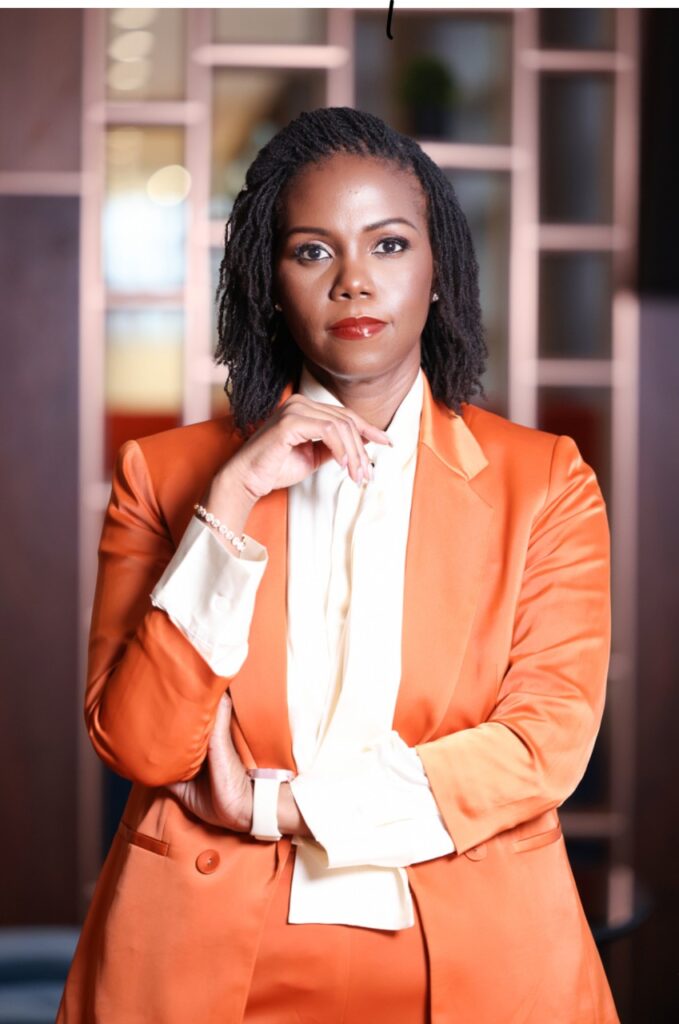
(Pictures supplied by the owner)
The first thing Sarah Chitongo wants you to know is that she almost didn’t go.
It was a Saturday evening in May 2025. London was warm. She was tired. Not the tired of a long shift, she will tell you later the tired of twenty years standing in maternity rooms watching things she could not unsee. She had a Mary Seacole Award on a shelf at home. She had her Fellowship of the Royal College of Midwives. She had the title of Queen’s Nurse and a career that, by any external measure, had succeeded.
And she was sitting in her car asking God if this was all.
“I almost turned the engine back on,” she says now, her voice quiet. “I almost went home.”
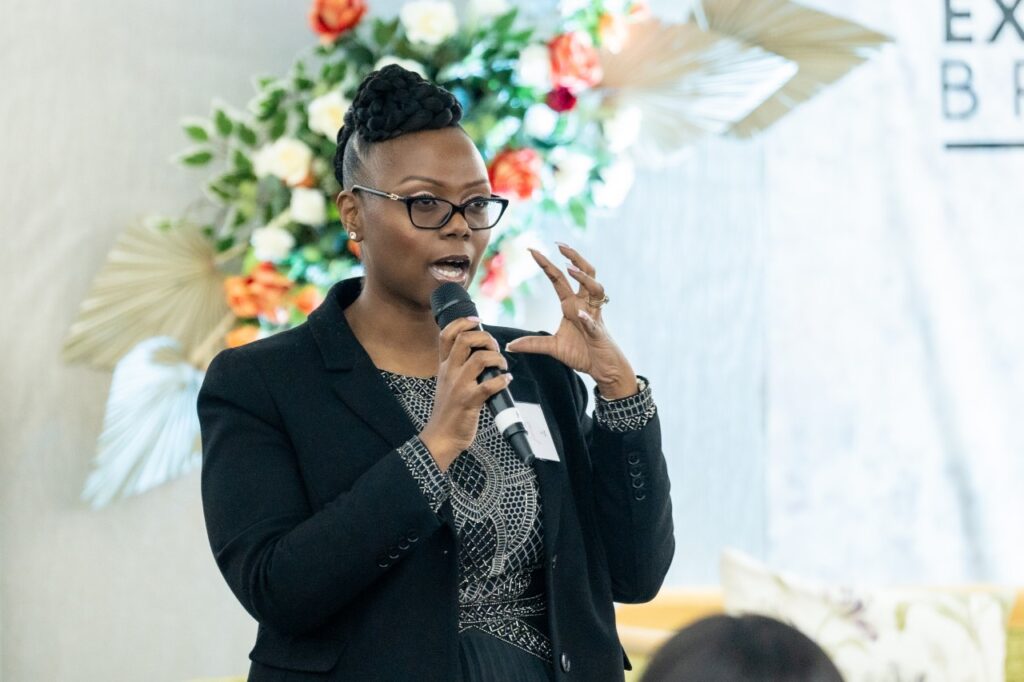
She did not go home. She went into the conference hosted by Sarah Garande Authentic Conversations. And what happened in the next ninety minutes a prayer, a commissioning, a hand on her head from another Zimbabwean woman she barely knew is the reason a 250-seat hall in Hertfordshire will fall silent for her on the 16th of May this year, and the reason a Higherlife Foundation philanthropist named Tsitsi Masiyiwa will be in the front row to hear what comes next.
Sarah Chitongo was born in Bulawayo.
There is a kitchen there, in her memory, that has never left her. The women in it were always working. Always tired. Always magnificent. Aunts who carried husbands and children and grief and the harvest, and who somehow still found the strength to braid your hair before church on Sunday.
Nobody asked them how they were.
“That is where this work begins,” she says. “Not in a hospital. Not at a university. Not in a policy paper. It begins in a kitchen in Zimbabwe, watching the most magnificent women I have ever known disappear in plain sight.”
She came to England as a young woman. She trained as a nurse. Then as a midwife. And on her very first shifts, in maternity wards thousands of miles from Bulawayo, she saw the same look in women’s eyes that she had seen on her mother’s face. The look of a woman speaking who is not being heard.
“Different country,” she says. “Same silence.”
Twenty years passed. She made her name.
Acting Deputy Head of Midwifery at NHS Kent, where she established a high dependency unit on a delivery suite for women whose pregnancies needed more than a delivery room could offer. Midwifery educator at Middlesex University, where she became the pioneer in Britain to put augmented reality headsets onto trainee midwives a piece of teaching innovation covered by Reuters, Voice of America, and the BBC. A tool that has saved thousands of mothers and babies lives.
And then the Mary Seacole Award, in 2018. The most prestigious honour available to a Black or ethnic nurse or midwife in the United Kingdom.
Chitongo used the funding to investigate, formally, what she had been watching informally for two decades: the experiences of midwives caring for high-risk Black, Asian and minority ethnic women in London hospitals. Her published report was unsparing. Stereotyping. Inadequate translation. Poor continuity of care. Cultural incompetence so embedded that staff could not name it.
The report did not make her career. It set the foundation. The career that followed has been built on it.
Which brings us back to the conference.
The event was called Limitless Woman a faith-driven gathering hosted by Sarah Garande, the Zimbabwean-born organisational psychologist whose Authentic Conversations platform has become one of the most influential spiritual leadership communities for African women in the diaspora. At the end of the evening, women were prayed for, by name.
Chitongo will not tell you exactly what was said over her that night. Some things, she says, are for keeping.
What she will tell you is what she walked out with.
“It was not a feeling,” she says. “It was a permission. Permission I had been waiting on without knowing I was waiting.”
“It was not a feeling. It was a permission. Permission I had been waiting on without knowing I was waiting.”
Within twelve months, she had founded a charity. Built a digital health platform. Launched a women’s body care brand. Walked into 10 Downing Street. Been invited to advise the British government on the national maternity strategy. Joined a research consortium with the President of the Royal College of Obstetricians and Gynaecologists. Sat on the reference group co-designing the new anti-racism principles that every UK university teaching midwifery will adopt from September. Contributed to the recommendations of the Baroness Amos investigation the most significant maternity reckoning Britain has had in a generation. Opened a research collaboration with Edinburgh, the world’s leading endometriosis research centre. Been invited into the BiteLabs Fellowship. Had celebrities teams make contact about backing the work. Begun advising countries on the African continent whose maternal mortality is not three times the UK’s rate, but thirty.
It sounds, when you list it like that, impossible.
“It was not impossible,” she says. “It was assigned.”
She talks about her work the way an architect talks about a building. Foundations. Pillars. Load-bearing walls. The first pillar is Black Blossom Alliance the charity she founded to transform outcomes for Black women and birthing people in the UK, where Black women remain nearly three times more likely to die in pregnancy or childbirth than White women. The disparity has not meaningfully narrowed in more than a decade.
“For twenty years we have been holding press conferences,” Chitongo says, the quietness gone now. “For twenty years the statistics have been reprinted on the front pages of newspapers. And we have been told, gently and politely, that change takes time. But the women dying are not waiting politely. We are tired of being told to be patient. We are not building awareness. We are building accountability.”
“We are not building awareness. We are building accountability.”
The second pillar is Vina.
Vina is a clinically governed digital symptom journal for women with chronic pelvic pain and suspected endometriosis, adenomyosis and fibroids. It is not a wellness app. It is not a diagnostic tool. It is a piece of clinical infrastructure designed to solve a precise problem: women in the United Kingdom wait an average of seven to ten years for an endometriosis diagnosis. For Black women, the wait is longer still, because Black women’s pain is dismissed twice once for being a woman, once for being Black.
Vina lets a woman track ninety days of structured symptoms, aligned to NICE clinical guidance, then walk into a ten-minute appointment with data the consultation cannot dismiss. The platform carries DCB0129 clinical safety certification with Chitongo as its Clinical Safety Officer. It has been reviewed by the MHRA. It is registered with the NHS Innovation Service. It is now in research collaboration with the EXPPECT centre at the University of Edinburgh, home of the world’s leading endometriosis researchers.
“We do not ask the system to listen better,” Chitongo says of Vina. “We hand the woman the receipts.”
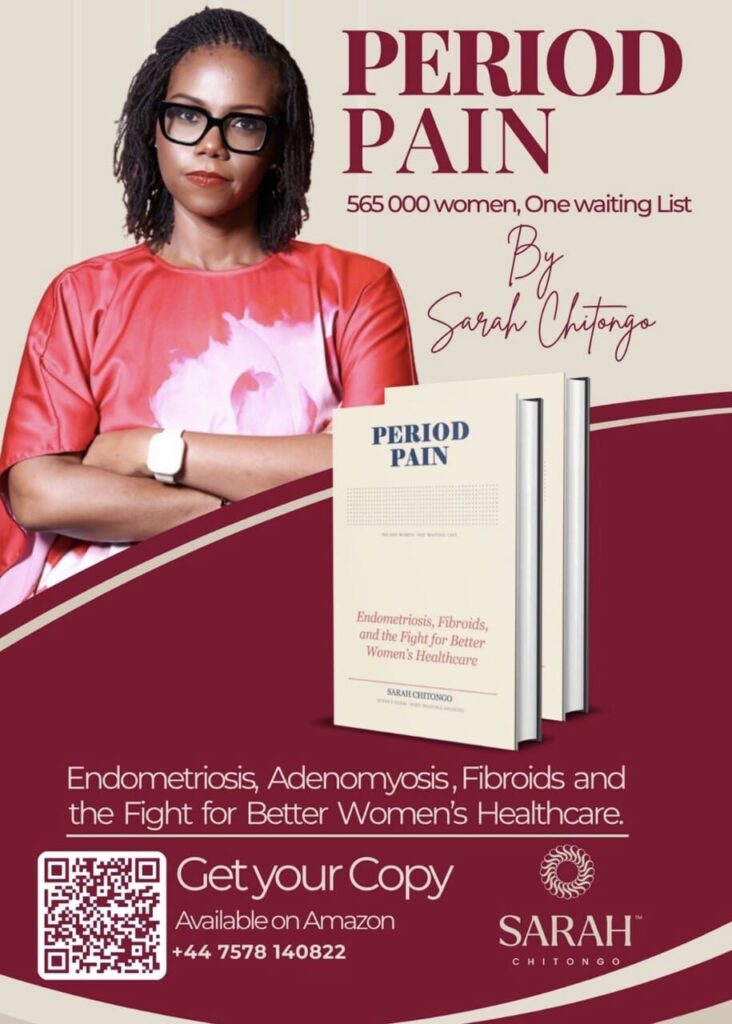
The third pillar is Kora Women an organic body care brand built on the principle that everyday body care for Black and Brown women should be safe, transparent, and free of shame. The fourth is the books. Reframing Risk, Redesigning Care is now taught across UK midwifery and postgraduate programmes, training the next generation of British midwives inside her framework. The Empowered series Empowered to Conceive and Empowered to Birth has been written for Black and Brown women navigating pregnancy in their own language. And her new book, Period Pains: Endometriosis, Adenomyosis, Fibroids and the Fight for Better Women’s Healthcare, is published this year.
She wrote it, she says, because she is done watching women in her community fold themselves around pain that nobody will take seriously.
“There is a war on women’s pain in this country,” she says. “And we have been losing it for two hundred years.”
She is asked, often, what it is like inside the rooms of power. Downing Street. The Commons. The NMC. The Amos investigation. The MiBirth research consortium.
Her answer is the same every time.
“I refuse to be the photograph.”
“I refuse to be the photograph.”
“Every Black woman who has ever been invited into a room of power knows the trap,” she says. “They want your face because it makes the report look right. They want your name on the panel because it makes the policy look right. They do not always want what your face, your name and your story actually mean.”
“I walk into those rooms with two things. The data they cannot argue with, and the women I represent. The midwife crying in the car park before her shift. The mother whose baby did not come home. I bring her with me, every meeting, every time. And I do not leave any room without an ask. What changes because of this conversation? By when? Who is accountable? The women I represent did not survive what they survived for me to walk out of Downing Street with a photograph.”
And then there is the continent.
Chitongo is being increasingly called upon by countries on the African continent whose maternal mortality is among the highest on earth. “The work was always going to come home,” she says. “I was born in Zimbabwe. I owe Zimbabwe. The women who taught me what dignity looks like are still there, still magnificent, still being asked to die in childbirth at rates the rest of the world abandoned a century ago.”
Her vision is the same architecture, adapted. The principles that make Vina powerful in Lewisham, she argues, can make it powerful in Harare. The culturally safe training she is co-designing for the NMC can be adapted for ministries of health across Africa.
“We have spent decades importing Western maternity models into African systems and then expressing surprise when they break,” she says. “African maternity care has been designed in rooms that do not contain African women. This is not aid. This is infrastructure. Built by African women, for African women. With UK clinical credibility, African community truth, and a refusal to keep waiting for somebody else to come and save us.”
“This is not aid. This is infrastructure. Built by African women, for African women.”
She will be back at Limitless Woman in May. Same room. Same chairs. Same prayers. A year almost to the day from the night she nearly went home.
Asked what she would say tonight to a young Zimbabwean girl reading this in Bulawayo or Harare or Lusaka a girl who has been told her dream is too big for the family she comes from she does not hesitate.
“If the dream you are carrying feels too big for the woman holding it, that is how you know it is yours. If it fits comfortably inside who you currently are, it is not a dream. It is a hobby.”
“The dream that is yours is the one that scares you in the morning and keeps you up at night and makes you wonder if God got the wrong woman.”
She pauses.
“He did not get the wrong woman.”
Sarah Chitongo is the founder of Black Blossom Alliance and founder and chief executive of Vina. Her new book, Period Pains: Endometriosis, Adenomyosis, Fibroids and the Fight for Better Women’s Healthcare, is published this year.
Hi~(* ̄▽ ̄*)